A static caravan that was left on a narrow village road in Tanyfron, near Wrexham, after a delivery could not be completed has now been removed. The caravan sat on Llewelyn Road for several days, drawing in North Wales Police and Wrexham Council, before it was towed away on the evening of Wednesday 14 October 2026.
Here is a summary of what has been reported, plus a short look at why access checks matter when a static caravan is moved.
What happened in Tanyfron?
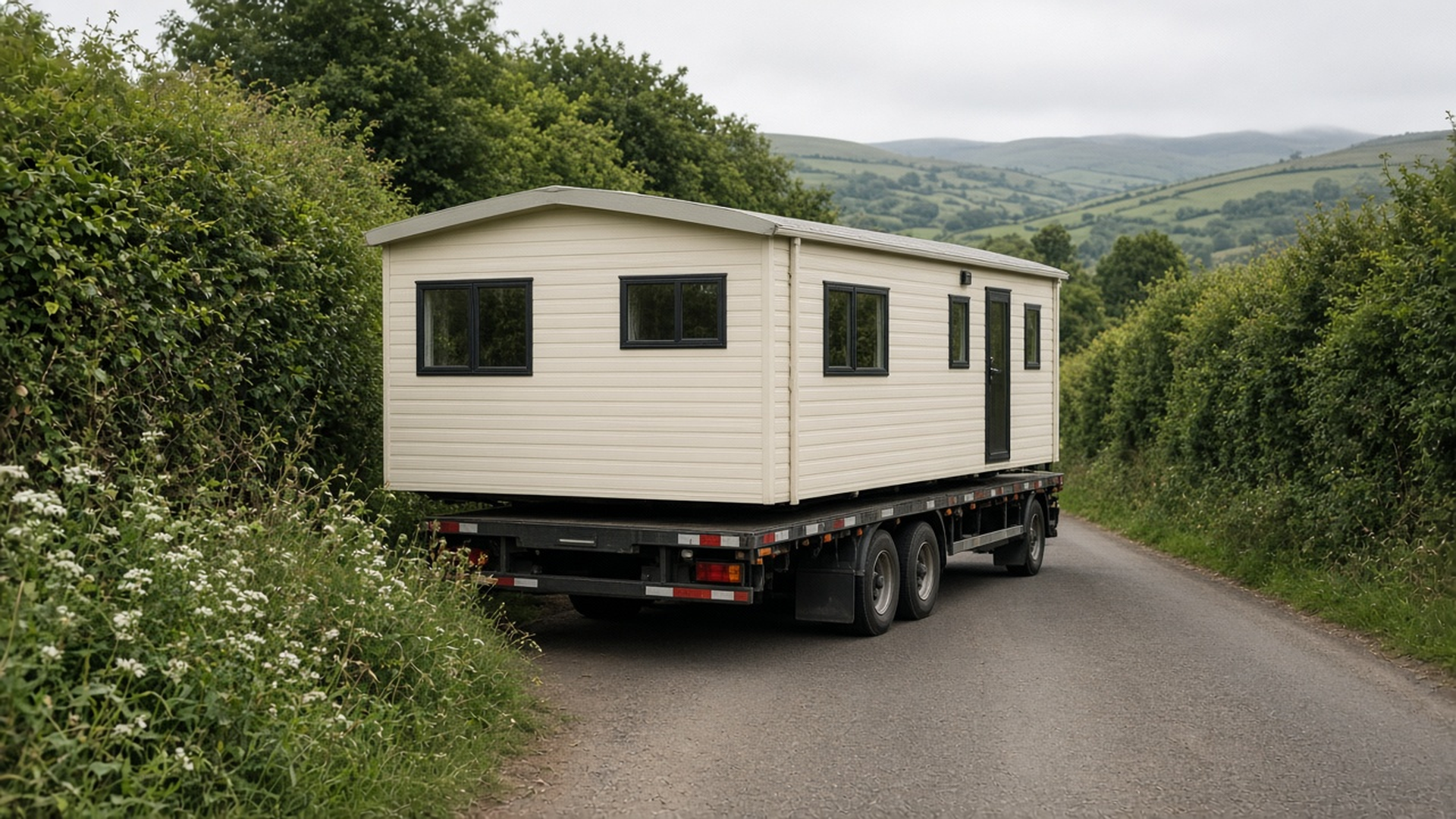
According to BBC News, the caravan was being carried by lorry up the narrow, single-track Llewelyn Road in Tanyfron on Friday 9 October. North Wales Police told the BBC that the road was closed after the caravan “was unable to be delivered to the recipient due to access to the property ‘being blocked’”.
The Leader reports that the caravan was being delivered to a farm on the road near Oak Court Farm. The delivery company attempted to unload the caravan and tow it in, but this was not possible. Police told those involved to move the caravan, and it was then placed in a position intended to minimise disruption. The Leader says motorists and pedestrians could take a short diversion around it, so residents were not blocked in.
Police said the recipient of the caravan had been advised to make arrangements to move it as soon as possible, and had since told officers they were unable to do so.
Damage to the caravan
The caravan suffered visible damage during the episode. When The Leader visited on Wednesday 14 October, it could be seen with smashed windows. The paper says it is not known when or how the windows were smashed.
What did the council and police say?
A Wrexham Council spokesperson told The Leader: “Wrexham Council takes unauthorised developments very seriously and will use its Planning Enforcement powers to secure resolutions to breaches of planning control. However, these powers do not extend to being able to prevent the passage of vehicles along a public highway.”
North Wales Police later said: “We have liaised with Wrexham Council who has acknowledged the matter lies with the local authority and has organised for the caravan’s removal. North Wales Police will consider any potential offences against the recipient of the caravan in due course.” No further details have been given about what those potential offences might be, and no outcome has been reported.
The caravan has now been moved
A follow-up report in The Leader confirmed that the caravan was removed on the evening of 14 October, five days after it became stuck. Local councillor Paul Rogers said it had been agreed that the council would take responsibility, using approved contractors. Photos shared with the paper showed the caravan being towed away by a tractor. Nearby residents said it was taken along Talwrn Road, but where it went afterwards is not known.
Cllr Rogers said: “Good news that the caravan has been removed. I would like to thank the council who dealt with this having taken over from the police today. I appreciate it has been frustrating and am pleased it has been resolved.”
It is worth stressing that we only know what has been reported. We are not suggesting that any individual or business is at fault, and any question of offences is a matter for the police.
Why access gets checked before a static moves
This story is a useful reminder of why moving a static caravan takes careful planning. A static is wide, heavy and designed to stay put. Once it is on a low-loader, it needs a route that suits its size from start to finish, including the final few metres to its base.
When a move is planned properly, the questions usually include:
- Lane widths and verges. Will the load fit along every stretch of the route, including narrow or single-track lanes, without scraping hedges, walls or trees?
- Gateways and turning space. Is the entrance at the destination wide enough, and is there room to turn and line the caravan up with its base?
- Overhead and underfoot. Are there low branches, cables or bridges along the way, any weight limits on the route, and is the ground at the destination firm enough?
- Permissions. Does the receiving site have the permissions it needs? Placing a caravan on private land can need planning permission and, in some cases, a site licence, so it is sensible to check with the local council before any move is booked.
- A fallback plan. If the final approach turns out to be harder than expected, where can the load wait safely without blocking the road?
Our article The Secret Life of a Caravan Haulier goes behind the scenes on route planning, park access, escort vehicles and collection day paperwork.
What this means if you are selling
If you are selling a static caravan from a holiday park, the park team and whoever collects the caravan will normally need to agree access, timings and paperwork before the move. Telling your buyer about any tight corners, soft ground or narrow gates on the way out of the park helps everyone plan the day. Our guide on selling a static caravan with a pitch licence explains what your agreement may say about removing a caravan from its pitch.
Thinking about selling?
When Static Caravan Buyer buys a static caravan or lodge, we arrange collection with the park as part of the purchase, and we charge no commission. We cannot promise to buy every caravan, but we are always happy to talk it through. We aim to contact you within 24 hours, and to make an offer within 48 hours after that contact. Payment is made on collection day before the caravan is loaded.
Call us free on 0800 644 5000 or visit www.staticcaravanbuyer.com to find out more. Please note we buy holiday static caravans and lodges, not residential park homes.
Share this article
Ready to Sell Your Caravan?
Get a free, no-obligation cash offer in minutes. We buy any make, model or condition across the UK.
Get Your Free Offer Now