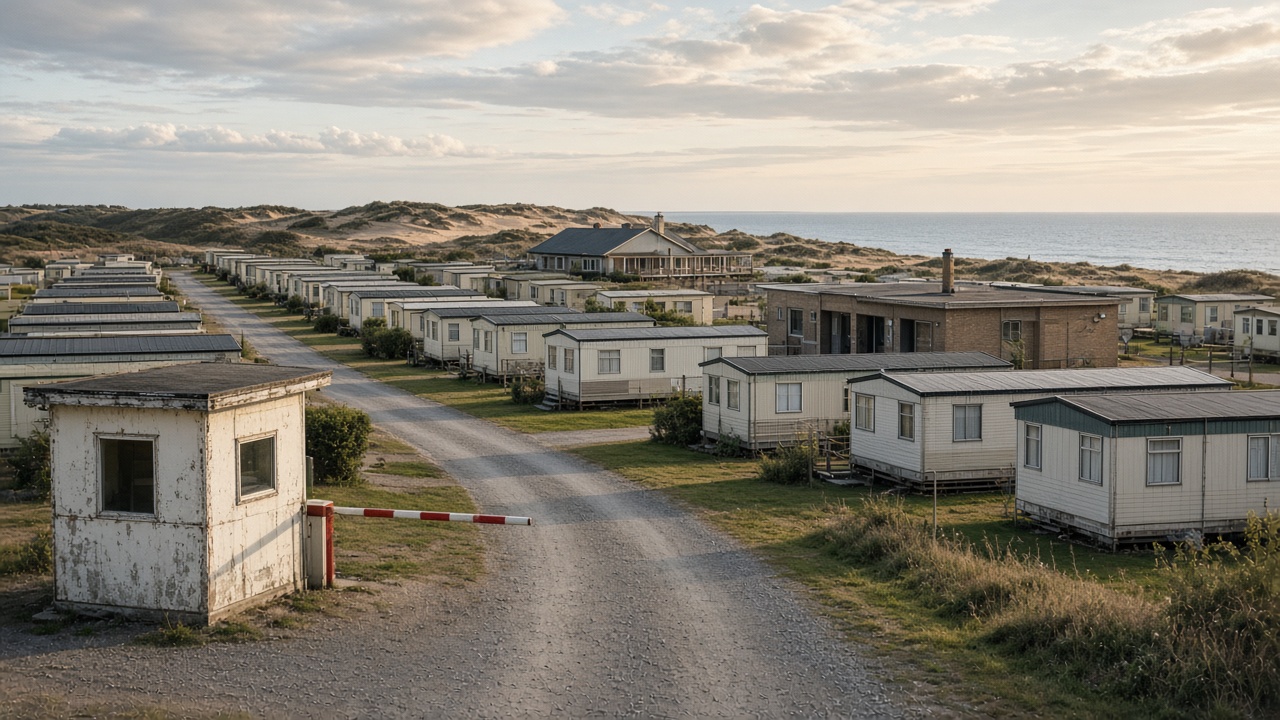
Walk onto certain UK seaside static parks and you can almost hear the decade before you see it. The road layout is a neat grid. The clubhouse still has a stage at one end and a bar at the other. The site map by the barrier booth is sun-faded and slightly out of date. None of this is accidental neglect, and it is not always a problem. A surprising number of coastal parks still feel locked in the 1970s because that is when their bones were laid down, and because the holiday product those bones support still sells.
This is not a dig at parks that have invested in lodges, pools and fresh branding. Plenty have. It is an observational look at why so many classic seaside static sites still read as mid-century British holiday culture, and why that frozen-in-time quality still helps the people who own caravans on them.
The bones were poured in a different Britain
Most mature seaside parks did not grow out of a 2020s masterplan. They grew out of post-war leisure demand, cheap coastal land, and a boom in family holidays that peaked when statics and chalets were the democratic alternative to a hotel.
That history shows up in the fabric:
- Pitch grids designed for smaller cars and simpler units, with service runs that follow those original lines
- Amenity blocks in brick or blockwork that were modern once and now feel institutional
- Clubhouses built as community rooms with a stage, not as lifestyle hubs with coworking nooks
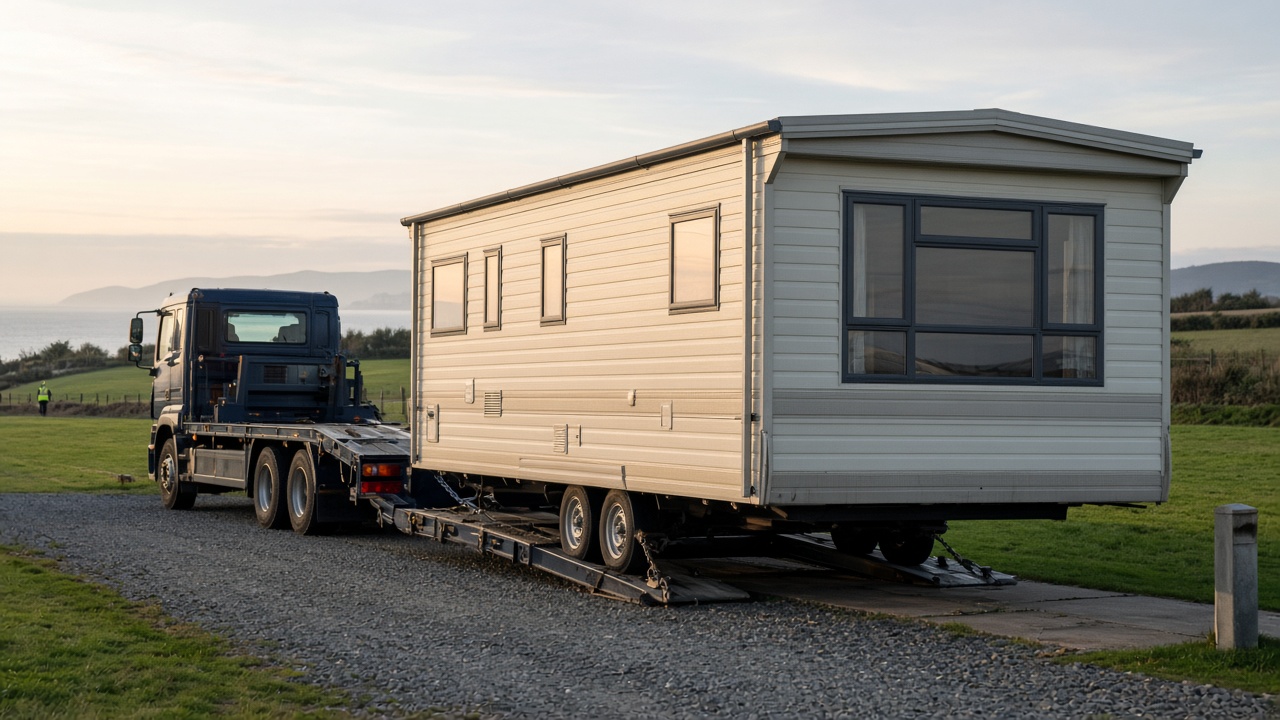
- Access roads that still force a careful reverse when a twin-axle delivery turns up
You can replace every caravan on a park and still feel the 1970s under your feet. The layout is the memory.
Clubhouses that never quite became "venues"
Spend an evening in a traditional seaside park clubhouse and the social script is familiar. Bingo cards. A quiz. A singer who knows every request from Sweet Caroline onwards. Soft seats in durable colours. A noticeboard with lost keys, bake sales and the entertainment rota.
Luxury resorts have moved toward hotel-style bars and spa soft launches. Many independent and older coastal parks kept the clubhouse model because it does a specific job: it gives owners and holidaymakers a shared evening without needing the town centre. That ritual is sticky. Multi-generation families return partly because the grandchildren get the same Saturday night arc their grandparents once did.
It can look dated from the car park. Inside, on a wet August evening, it still works as the social heart of the park.
Signage, maps and the language of rules
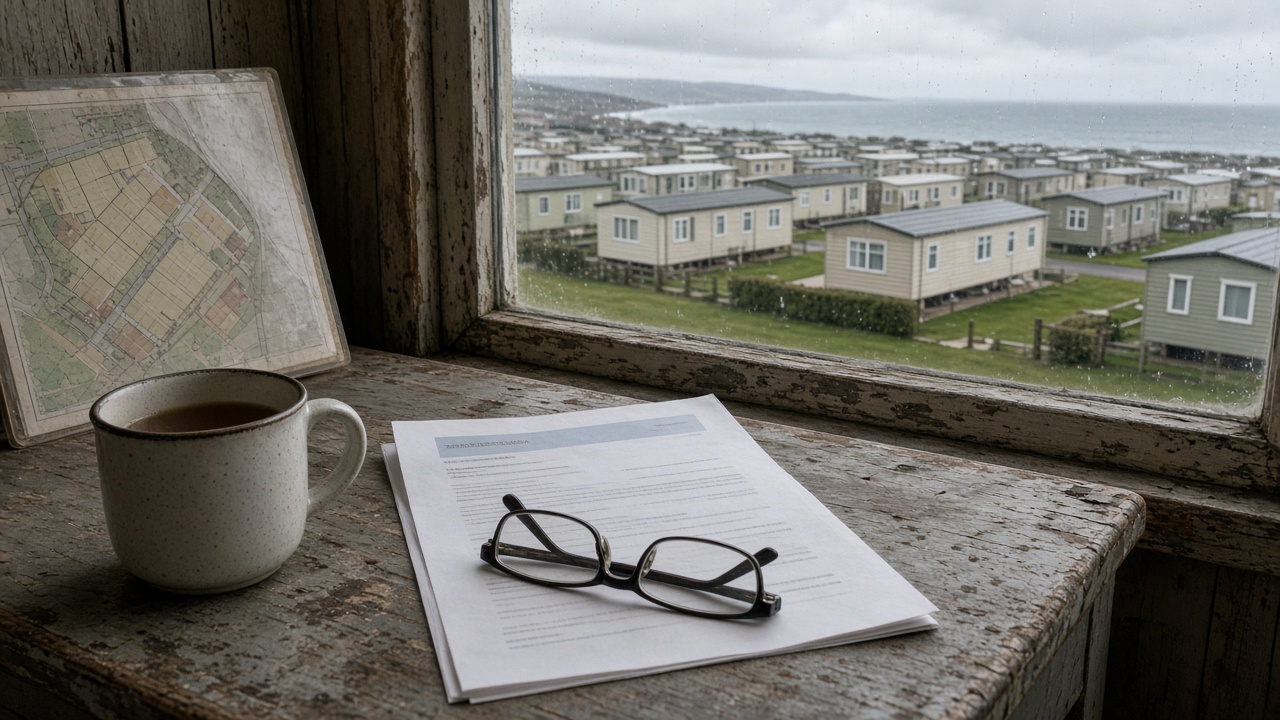
Seaside park signage is a genre of its own. Hand-painted or long-weathered boards. "Pitch numbers this way." "No ball games near the vans." A laminated map curling at the edges. Speed limits that feel personal rather than corporate.
Modern parks lean on wayfinding apps and branded totems. Older seaside sites often keep the older language because owners already know the routes, and because replacing every sign is a capital project with little revenue upside. The result is a visual time capsule. It signals continuity. For some buyers, that continuity is reassurance: this is a proper park, not a temporary pop-up of lodges.
Seasonal rhythms that outlast fashion
The calendar on many coastal static parks still follows a 1970s logic more than a year-round city leisure logic.
- Easter stirs the place awake
- School holidays pack the lanes
- September softens
- Winterisation and closed gates define the off-season
That rhythm shapes how owners use their vans, how parks staff the bar, and how the surrounding seaside towns feel from one month to the next. Boutique all-year lodge parks serve a different market. Classic seaside static ownership still often means a defined season, a shut-down, and the small rituals of opening up again: turning on the gas, airing the cushions, walking the dog before the first proper weekend.
Those rhythms feel old-fashioned next to short-break culture. They also create scarcity and anticipation, which is part of why people keep paying site fees for a van they only use in certain months.
Architecture that is practical before it is pretty
Look past the caravans themselves and you often find:
- Flat-roofed shower and laundry blocks
- Steel barriers and brick booths at the entrance
- Utility corridors that were never meant to be scenic
- Decking and skirting added later, in different decades, in different styles
None of this was designed for Instagram. It was designed for weather, turnover and cost. Coastal parks take a beating from salt air. Capital goes first into drainage, electrics, flood resilience and road repairs. Cosmetic refresh comes second, if it comes at all. That is one reason the "1970s feel" persists even when individual vans on the pitch are brand new.
Why the time capsule still sells
If the look were pure liability, these parks would have been rebuilt or emptied. They have not been. Demand for seaside static ownership remains strong for reasons that have little to do with interior-design trends.
Location still beats gloss. A pitch within walking distance of the beach, the front, or a proper chip shop outperforms a prettier park inland for many families. The product is the coast, not the corridor carpet.
Nostalgia is a real purchase motive. Adults who holidayed on similar parks as children often want that same low-friction, known quantity for their own kids. The dated clubhouse is not a bug in that story. It is the feature.
Loyal, multi-year owners stabilise occupancy. Parks with long-standing owner communities can feel socially "stuck" because the same households return. That loyalty underwrites site-fee income even when the buildings look tired.
Full redesign is expensive and disruptive. Replanning roads, relocating services and rebuilding the clubhouse means years of capital and temporary upheaval. Many operators modernise in patches: new vans on old pitches, a refreshed bar without a new footprint. The 1970s skeleton remains.
A distinct identity still markets itself. In a market full of similar lodge photography, a traditional seaside park can stand out precisely because it does not look like every other brochure. Some owners actively prefer "proper park" over "resort."
What has changed (quietly)
Feeling like the 1970s does not mean nothing has moved. Under the surface you will often find better fire and electrical standards, Wi-Fi, stricter rules on decks and subletting, a wider mix of unit ages on the same old grid, and more professional site-fee paperwork.
The social atmosphere can stay familiar while the compliance layer modernises. That split (old feel, newer rules) is easy to miss if you only judge a park by the colour of the clubhouse curtains.
How owners can read a "1970s" park usefully
If you own on a classic seaside site, or you are thinking about one, treat the time-capsule feel as information, not just nostalgia.
- Ask whether the layout still works for your unit size and access needs
- Notice whether the clubhouse and entertainment still match how you actually holiday
- Separate charm from deferred maintenance (a quirky map is fine; failing drainage is not)
- Remember that buyers of used vans often price the park experience as heavily as the make and model
A park that feels stuck in the 1970s can be a brilliant base or a frustrating one. The difference is rarely the wallpaper. It is whether the location, community and running costs still fit your life.
Still relevant, still personal
UK seaside static parks that still feel like the 1970s are not simply behind the times. Many are living archives of a holiday model that never fully went away: seasonal, social, coastal, and built around the van as a second home rather than a hotel room. That model still has commercial gravity because the sea does not go out of fashion, and because a large part of the ownership market still wants familiarity over fashion.
If you are weighing up what your own seaside static is worth in that landscape, Static Caravan Buyer can help with a free, no-obligation valuation. Call 0800 644 5000, or get in touch through the site. We buy statics and lodges across the UK, in any condition, without pressure.
---
Share this article
Ready to Sell Your Caravan?
Get a free, no-obligation cash offer in minutes. We buy any make, model or condition across the UK.
Get Your Free Offer Now