From the pitch, a static caravan move can look almost casual. A big truck arrives. Someone waves. The unit leaves. Job done.
Anyone who has stood on a British holiday park at 7am on collection morning knows that is theatre, not the whole play. Behind a "simple" collection sits a small industry of route planning, park permissions, escort driving, weather calls and careful lifting. As Static Caravan Buyer, we buy statics and lodges nationwide and arrange collection, so we see this world often. This is a look behind the curtain: what hauliers actually do, why a day can vanish into one move, and how owners can make the day smoother.
What "haulage" really means for a static
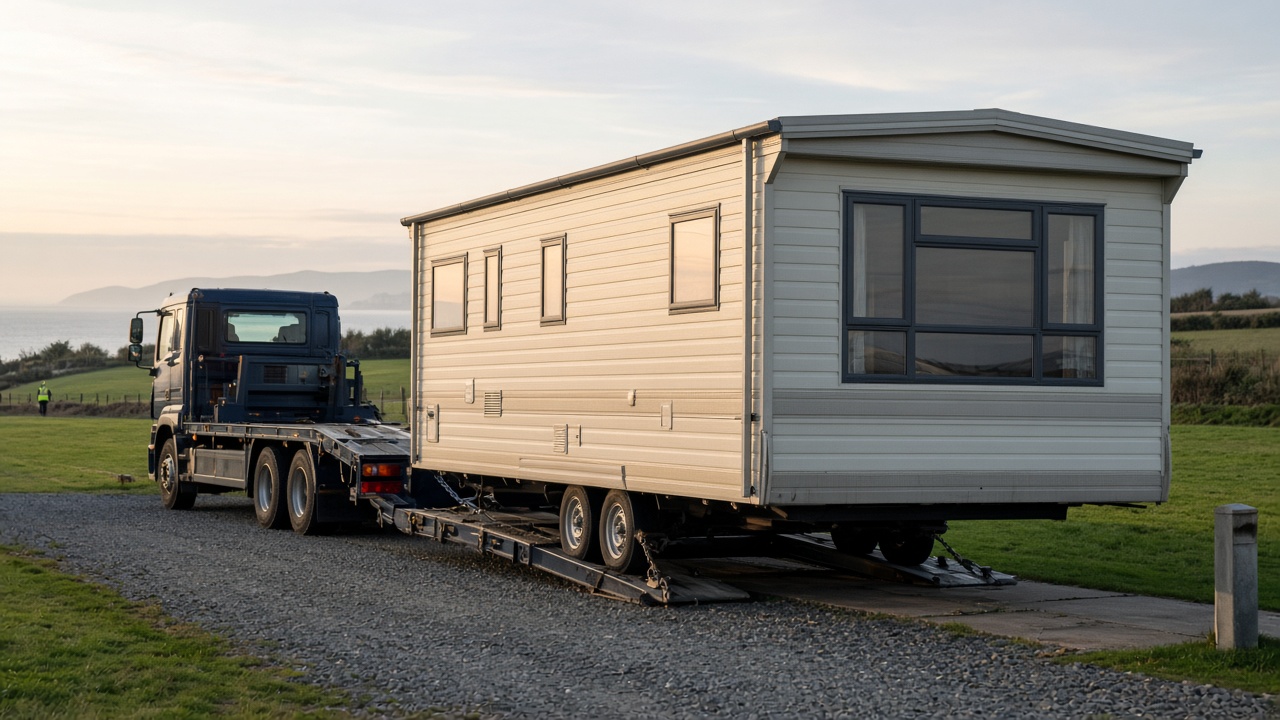
Touring caravans hitch up and go. Statics and many lodges do not. They are wide, heavy, and designed to sit still. Moving one is specialist work: low loaders or purpose-built transporters, sometimes a crane or forklift at either end, and a crew who know park gates as well as dual carriageways.
Think of it less like "posting a parcel" and more like relocating a small building that must travel on public roads without scraping hedges, blocking coaches, or upsetting the site office.
The night before: maps, calls and a weather eye
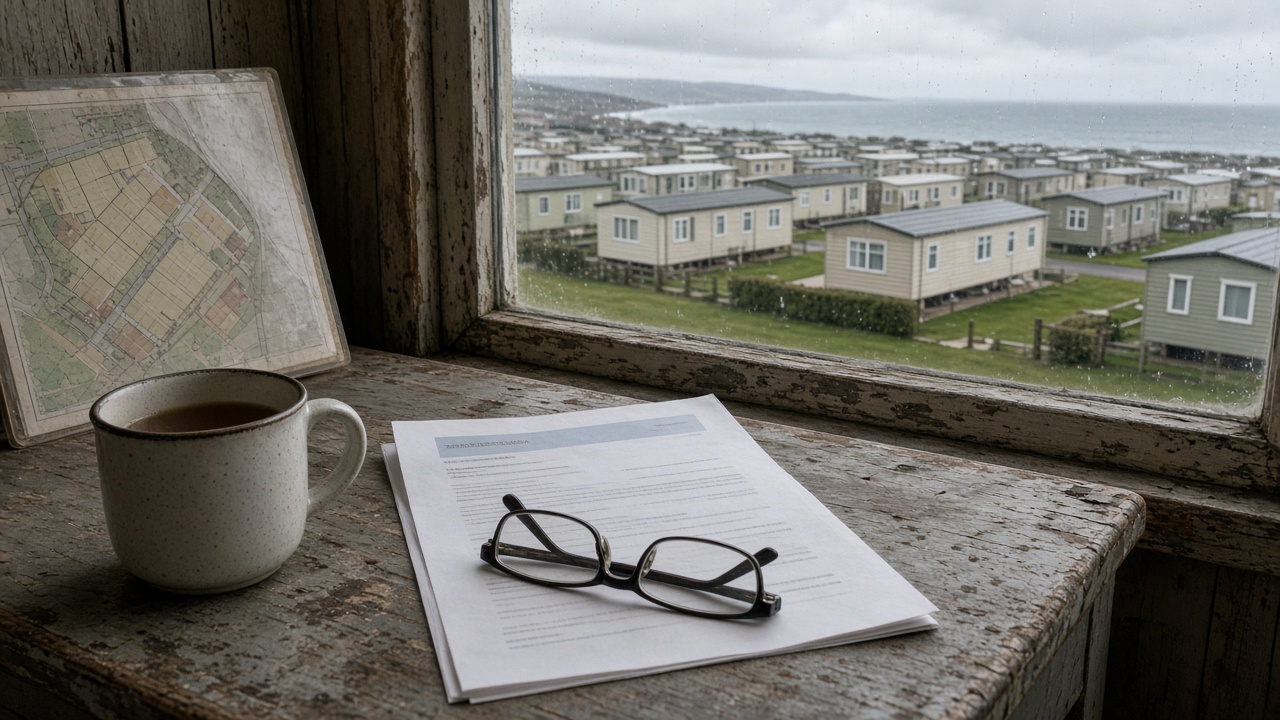
Good hauliers rarely turn up cold. The evening before a collection often includes:
- Confirming park access times and any booking slot with the site office
- Checking pitch number, unit size and any known tight corners on site
- Planning the road route with bridges, weight limits and low branches in mind
- Deciding whether an escort vehicle is needed for wider loads
- Watching the forecast (wind, ice and flooding change everything)
Illustrative example only: a coastal park reached by a single-track lane may need an early start so the transporter is on the main road before school-run traffic. That is not drama. It is ordinary planning.
Collection morning: the quiet choreography
Arrival and park rules
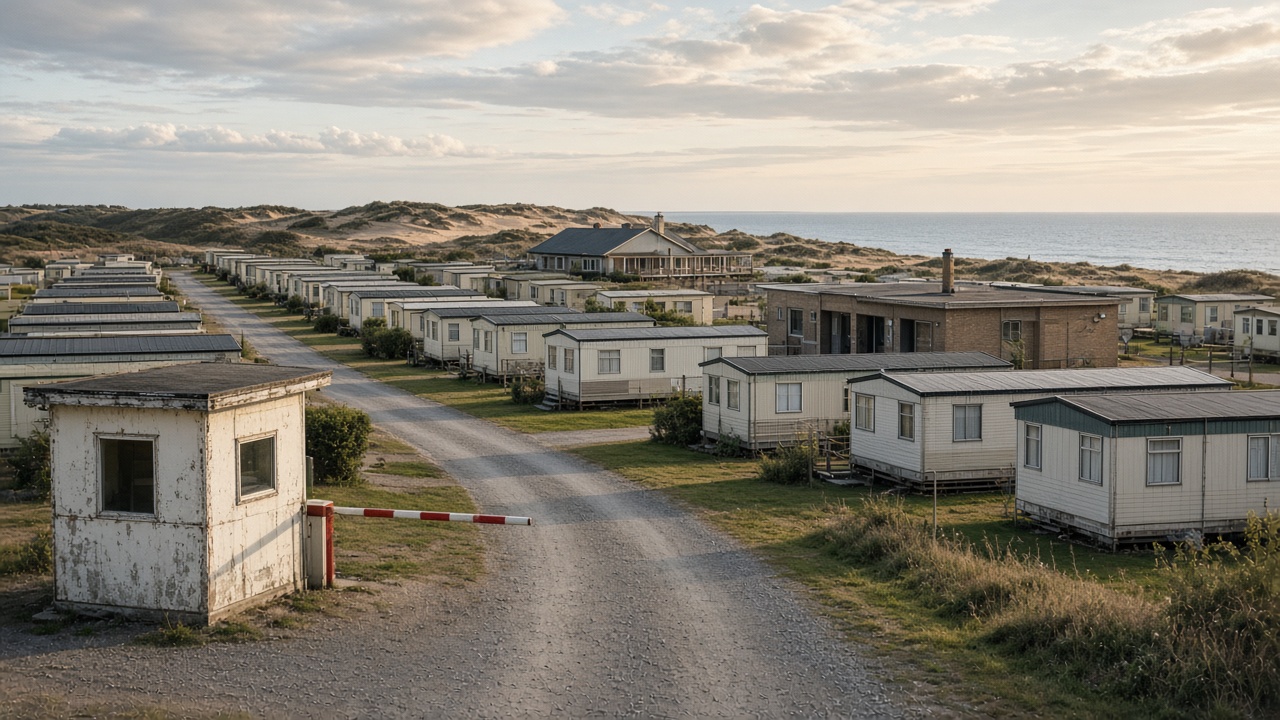
Parks are not open yards. Barriers, one-way roads, speed limits, pedestrian paths and occupied pitches all constrain the job. The haulier usually signs in, confirms the pitch, and checks where the truck can wait without blocking fire lanes or gas deliveries.
Paperwork matters here. Parks often want proof of permission to remove the unit, confirmation that site fees or exit admin are in hand, and clarity on who is taking the van. When you sell to a cash buyer who collects, that chain of permissions is part of what the buyer and haulier organise with you and the park. It is why "we will just turn up with a truck" is rarely the whole story.
Disconnecting and clearing the pitch
Before anything lifts, services come off: electrics, water, gas, and any decking or skirting that must be removed for access. Owners who have already emptied cupboards, drained water systems where asked, and cleared steps or pots from the haul path save real time. A haulier can wait politely while someone finds the keys to a shed, but the clock is still running.
The lift (when it is not a simple roll)
Some units leave on their chassis with careful towing onto a trailer. Others need a crane or heavy forklift because of levels, soft ground, trees, or tight spacing between neighbours. Those moments look spectacular. They are also the bit nobody wants to improvise. Ground conditions after rain, overhead cables, and how far the crane can reach from a hardstanding all get checked before the hook goes up.
When it goes well, it looks calm. When it does not, it is usually because someone skipped the survey of the pitch.
Why a "simple move" can eat a whole day
Owners sometimes hear "collection on Tuesday" and picture an hour. Hauliers often budget a full working day for one awkward park job. Reasons include:
- Travel time both ways. The transporter may start hours away. UK statics sit from Cornwall to Scotland, and empty miles still cost time.
- Park windows. Some sites only allow removals on certain mornings, or outside peak holiday weeks.
- Escort and width. Wider loads may need an escort vehicle, slower speeds, and carefully timed junctions.
- Narrow lanes and villages. Coastal and rural parks often sit behind lanes that were never designed for a static on a trailer. Passing places, reverse manoeuvres and waiting for oncoming traffic are normal.
- Weather holds. High wind can stop a crane lift. Ice can make a slope unsafe. Heavy rain can turn a grass pitch into a recovery problem.
- Second-end logistics. The unit is going somewhere: another park, a storage yard, or a buyer's depot. That destination has its own access rules and daylight limits.
None of this means the industry is chaotic. It means the easy-looking finish line hides a lot of sequencing.
Escort vehicles, wide loads and British roads
Not every static move needs blues-and-twos theatre. Many travel under standard abnormal-load practices with marking, lighting and, where required, an escort. The escort driver's job is partly navigation and partly public manners: slowing traffic, covering junctions, and keeping the load out of scrapes with mirrors, hedges and oncoming vans.
Britain's mix of A-roads, village centres and low bridges is the real enemy. A route that looks short on a sat-nav can be useless if a railway bridge is too low or a town centre has a tight island. Experienced hauliers keep mental maps of which parks "always need the inland route" and which coastal approaches only work at quiet times.
Paperwork: the unglamorous hero
Collection day is not only diesel and straps. Typical threads include:
- Park authorisation to remove the unit from the pitch
- Proof of ownership or sale completion paperwork
- Agreement on what stays (decking, sheds, contents) and what goes
- Insurance and liability for the move itself
- Any local requirements for abnormal loads on that route
When Static Caravan Buyer agrees a cash purchase with collection, we treat haulage as part of the deal, not an afterthought. Owners should still expect the park to be looped in. A haulier who arrives without the site office onside can be turned away at the barrier, which wastes everyone's day.
What owners should prepare before collection
A little owner prep changes the mood of the morning. Practical checklist:
- Empty personal belongings early. Leave only what the buyer has agreed to take, if anything.
- Ask the park what they need for exit. Admin forms, fee settlements, key return, meter readings.
- Clear the haul path. Pots, bikes, loose decking boards, washing lines, and ornamental stones trip crews up.
- Note access quirks. Soft ground, a narrow gate, a neighbour's overhanging hedge, a locked inner barrier. Tell the buyer or haulier before the truck leaves base.
- Be reachable on the day. A mobile number that actually rings saves reverse shunting while someone hunts for a signal at the clubhouse.
- Decide who will be present. Some parks prefer the owner or their representative on site for handovers. Confirm expectations in advance.
- Photograph the pitch and unit beforehand. Useful for your records, and handy if any condition questions arise later.
None of this is about making owners into haulage experts. It is about removing the small surprises that turn a four-hour job into an eight-hour one.
Weather, seasons and the "we will squeeze it in" myth
Autumn and winter collections are common when owners sell after the season. They are also when weather bites hardest. Short daylight, wet ground and wind all shrink the safe working window. Spring and summer bring better light, then busier parks and tighter removal slots.
If a haulier or buyer suggests waiting a day for wind to drop, that is professionalism, not foot-dragging. A rushed lift in a gale is how neighbours get a story they did not ask for.
Why professional haulage matters when you sell to a cash buyer
DIY moves and "mate with a tractor" solutions sound thrifty until something snags a roof, blocks a lane, or leaves the park facing a complaint. Professional static haulage exists because the risk sits with the load, the public road, and the pitch either side of yours.
When you sell to a cash buyer who collects, you are usually buying peace of mind as much as a price: one coordinated removal, park liaison, and a crew used to holiday-park constraints. That does not make every collection glamorous. It does make it more likely to finish without a sequel.
From our side of the fence, the secret life of a caravan haulier is mostly unglamorous excellence: early alarms, thermos flasks, radio chatter, and a deep respect for tight corners. The glamorous bit is the moment the pitch is clear and the road ahead is open.
Free valuation if you want a buyer who arranges collection
If you are weighing a sale and the thought of organising transport yourself is part of what is putting you off, Static Caravan Buyer can help. We buy static caravans and lodges across the UK and arrange collection as part of a straightforward cash purchase where that suits the deal.
Call 0800 644 5000, or visit https://staticcaravanbuyer.com, for a free, no-obligation valuation. No hard sell. Just a clear conversation about your van, your park timing, and whether a collected sale is the simpler path.
Share this article
Ready to Sell Your Caravan?
Get a free, no-obligation cash offer in minutes. We buy any make, model or condition across the UK.
Get Your Free Offer Now